ECX Discussion Topics
Here is a library of this week's and past topics for our English Corner ECX. Use these freely — run them at your own meetups, share them, build on them. Just credit ECX — English Connect X and keep it non-commercial. Licensed under CC BY-NC 4.0.
For most topics, you can go as simple or as deep as you like, depending on your group's interests, level, and time. The difficulty level that I assigned is based on experience from actually running the topic, not just a hypothetical situation.
"Hard" level topics may not necessarily be about the English. They may also involve more complex ideas, abstract concepts that culturally are hard to understand, or more controversial topics. (Some may seem easy on the surface!)
I'm often asked — who wrote these? Me. (Dioni :) Occasionally people have helped or given suggestions, but these topics are mostly the footprints of one person's life, spurred by my own experience, life trajectory, and things that I observe around me.
43 topics
"The measure of a life is not what you consume, but what you contribute. Spend less time owning, consuming, taking. Spend more time giving, creating, making."
Dolly Parton was a country music star and one of the great philanthropists. She gave away millions of free books to children. She died on 25 August, 2 weeks before this meeting. One of her quotes:
"I'm one of those people who, even if things are not right, goes about trying to make it as right as I can rather than just lying around on my ass and wallowing in it all day… If there's a better outfit, I want to wear it. If there's a better song, I want to write it. If there's a better record, I want to record it. If there's a better movie, I want to make it. And I intend to keep coming up with new ideas all the time."
Warm-up
What did you make recently? Anything at all. Roughly how many hours did you spend consuming — watching, scrolling, shopping, listening — and how many creating? Be honest. 😬
Would you rather eat or cook? Would you rather read or write? Make video or watch?
Is creating only about art? Some of you will say "I'm not a creative person." Is that true, or is everyone at heart a creative person?East vs West
Is the obsession to create a Western idea? Being original has always been the holy grail in the west, and to be original you need to create.
Meanwhile Confucius says: 述而不作,信而好古 — I transmit, I do not create.
Is being creative embedded (or not embedded) in the culture? Dolly Parton or Confucius?Big Picture
Modern China creates enormously but as productivity and contribution, something you give to the family or the country. The Western version is creation as self-expression.
My quote at the top says contribute. My title says create. Are they the same thing?So who is it you're supposed to be creating for? Do you think consuming is better for the greater good i.e. support the country? Is creating a luxury reserved only for people who have time, money, and energy left over?
Reflection
When did you last create something completely useless — no purpose, no audience, nobody would ever see it?
Have you created something that will outlive you? What will you create this week?Friendship looks easy on the surface because everyone agrees it’s nice. But is it easy and that simple? 😉
Let’s start with an intriguing stat
Studies have found that only about half of friendships are mutual. When people were asked, they predicted 94% of their friendships were reciprocal and that both people would call it a friendship. The real number was 53%.
Are you surprised by this? Think of someone you'd call a close friend. Are you as close to them as they are to you? Is there someone you rank higher with than they rank with you?
Opposite-gender friendship
What is your true definition of friends with the opposite gender?
Would you go out or have dinner alone with a close friend of the opposite gender after you’re married or in a relationship? Would it be awkward to tell your partner?Friendship after 30
The fact is most people developed friendship during school and university.
How do you make a real friend after 30? Have you outgrown someone and not told them?
When did you last make a genuinely new close friend, and how did it happen?Aristotle’s friendship
The ancient Greek philosopher Aristotle divides friendship into three distinct types based on the motive behind them: utility, pleasure, and virtue.
Friendship of Utility — People love each other because they get something useful in return.
Friendship of Pleasure — People are friends based on shared joy, fun, or good feelings.
Friendship of Virtue (Character) — People are friends based on who the person is, not what they can provide. This is Aristotle’s highest and rarest form of friendship.Do you recognise all these three types of friendship?
Sort your own friends into the three piles — which pile is biggest?
And which category would your friends put you in?I think this is the perfect topic for our 50th meet up: the ever un-translate-able, the mysterious, the magical word called 缘分. You can try to translate it to "fate," "destiny," "luck," or "serendipity" — but none of those rings true. It's really something that is specifically Chinese, that I only ponder about when I have the word in my vocabulary, and never before — which only proves once again, that you can only think or feel about something, when you have the word.
Truly I think 缘分 is one of those words you can only really learn through stories. So tonight, let's tell those stories. 😉
Warm-up: How did you end up in this room?
Tell us the chain of events that brought you here tonight.
Not just "I saw the event on the mini-app." Go backwards. What were you doing then? Did someone tell you? How did you know them? What if that one thing hadn't happened — the decision to drop by, the friend who dragged you along, the pull that brought you to Kunming?
Then, is there someone in this room you would never have met in your normal life? Tell us about them. 😄
Your Stories
Can you have 缘分 with a city? A cat? A job? A book? Or is it only for people?
How did you end up in Kunming, of all places? Job, love, an accident, a whim? Do you feel like you have 缘分 with this city?In English we have: fate, destiny, serendipity, chemistry, soulmate, "it was meant to be," "the universe brought us together." I think all the English words are too heavy, but also at the same time, not enough. What do you think?
Think of one person you met completely by chance who ended up mattering a lot to your life. What if that moment had never happened? A couple of minutes difference, an accidental bump on the road, a last minute change of plan?
I'll close with something that I think is the most beautiful thing ever written about 缘分, by one of my favourite authors Eileen Chang 张爱玲 🥹:
于千万人之中遇见你所要遇见的人,于千万年之中,时间的无涯的荒野里,没有早一步,也没有晚一步,刚巧赶上了,那也没有别的话可说,惟有轻轻地问一声:"噢,你也在这里吗?"
"Among thousands of people, you meet the one you were meant to meet. Among thousands of years, in the boundless wilderness of time, neither a step too early nor a step too late — you happen to run into them just in time. And there is nothing else to say, only to ask softly: Oh, you're here too?"
Is there someone you met once, felt something with — a friend, not necessarily romantic — and never saw again? Do you still think about them?
Fifty meetings. Whatever brought each of you here — 缘分, a bored Friday, a rainy day, or a not-rainy day — I'm glad you came. 噢,你也在这里吗?❤️ Here's to 50 meetups of 缘分 — and everyone it's brought into this room. ☺️🥂
boredom — that restless, empty feeling of having nothing 'interesting' to do
A couple of things before we get started:
-
The Phone Stack Challenge: Everyone stacks their phone in the middle of the table, then leave them for the rest of the discussion.First person to reach for their phone gets a punishment. Decide the punishment as a group before you start. 😏
-
Sit in silence for 60 seconds, no talking, doing absolutely nothing. How did that feel? Was that painful?
Let's get into it
Are you easily bored? Deep down, are you actually scared of being bored?
When did you last do absolutely nothing — no phone, no plan, no music, just sitting?Deep Dive
Is boredom about empty time, or empty motivation? Is it a state of mind, or just a lack of things to do?
Can you be bored while busy e.g. stuck in a meeting, scrolling your phone, and NOT bored while doing nothing, like sitting quietly with tea?
Do you think boredom may be useful i.e. for creativity or reflection? Or is it simply wasted time?
Have phones killed our ability to be bored?What do you think you might be avoiding when you fill up every minute of your day?
Big Picture
Is being able to feel bored actually a kind of privilege? (only for people who have their basic needs already met)
It is said that 无聊 in Chinese carries a harsher tone than "boredom" in English — closer to "pointless" or "meaningless." Meanwhile 闲/悠闲 (leisure, unhurried time) has a long, almost aspirational history in Chinese culture — tea, calligraphy, doing nothing on purpose. Is this true?I'll close with a couple of quotes:
"Attention is the rarest and purest form of generosity." — Simone Weil
"A generation that cannot endure boredom will be a generation of little men [and women!] ... a certain power of enduring boredom is essential to a happy life." — Bertrand Russell's The Conquest of Happiness
Agree? Should we crush boredom, or should we enjoy it? 😉
-
compass 🧭 — literally, an instrument that always points north, no matter which way you turn. Figuratively, the internal sense that tells you which way is "right" for you — even when the whole world around you disagrees.
A lot of us go through life without ever checking whether we even have a compass, or if we're just following the person walking in front of us.
How do you know you're going the right way? And when you're lost, what do you reach for? What compass do you use?WARM-UP
When you were a child, who or what was your compass? A parent, a teacher, a book, a religion?
Do you feel like you currently have a clear sense of direction in your life, or are you still figuring it out?PERSONAL COMPASS
What do you actually use to decide if something is "right" for you? feeling/intuition, logic, other people's opinions?
Is it easier to stay true to your compass — even when the whole world around you disagrees, or can it be harder at times?
Is having a clear "direction" in life more important than knowing your final "destination"? Are they the same thing?Some people seem to always know exactly where they're going. Others drift and figure it out as they walk. Which are you? Does it matter if you're going the "right" direction, if you're happy where you are right now?
Has your compass ever failed you?
BIGGER PICTURE
Would you agree that in Chinese culture, there's more emphasis to follow the path laid out by family/society and tradition?
How does that compare with "the West"? Some say money is the modern compass. Do you agree? How about modern China?At the end of your life, do you think you'll have judged your direction by where you ended up, or by whether you stayed true to the compass the whole way?
I will close this with one of my favourite quotes ever: ♥️
"Not all those who wander are lost." — J.R.R. TolkienAgree? Or is wandering sometimes just a nicer word for lost?
As always — take it wherever the group wants to go. 🧭loneliness — the painful feeling of being disconnected from others.
INTRO
I recently watched a documentary on Japan’s loneliness crisis, in which it mentions a few things that strike me:
- Research analysing the public mental health found that 40% of the entire Japanese population feels loneliness.
- It’s not worst among the elderly, as you might expect. The loneliest are working-age, nearly 50% in their 20s and 30s feel lonely.
- Japan appointed a Minister of Loneliness in 2021 (the UK did it first, in 2018). Yes, it’s real, I checked! 😮
- Researchers have compared the health damage of loneliness to smoking 15 cigarettes a day, and it is more harmful than obesity.
People often say, Japan is a good indication of where China is heading. Is this China in 10-20 years, or is the loneliness epidemic already here?
DEFINING THE TERM
In English, we have a few words to define ‘loneliness’. What's the difference between being alone, being lonely, and solitude?
In Chinese, I think there are two: 孤独 and 寂寞? What's the difference? Does one sound better than the other?UP CLOSE & PERSONAL
Do you feel more lonely in a crowd or when you are alone at home?
In what situation or which place that you unexpectedly feel lonely? In a big family dinner? In a city of 20 million people? In a marriage?When in your life have you felt the loneliest? When do you feel the least lonely? (which strangely, may be the same question :)
Is loneliness the absence of people or the absence of belonging? What do you think people are longing for when they feel lonely?Is some loneliness necessary, even useful? Have you ever learned something about yourself only because you were alone?
What are the things that have you done in the past to make yourself NOT lonely?
Is it shameful to feel lonely?DEEP DIVE
Do you think technology has made people lonelier? (Survey found heavy phone users reported more loneliness, not less.)
Is loneliness a modern disease — created by cities, phones, and the collapse of the old village/family structure? Or is it an eternal part of being human that everyone has felt?Whose job is it to fix loneliness? What would you do if your job is the Minister of Loneliness?
As always, these are just starting points. Take it wherever your group wants to go. 😌
Regardless of your gender, are you more of a PRINCE or a PRINCESS in your real life? This is not a discussion about men versus women. Instead, it explores a deeper question: Are you the rescuer or the rescued? An actor or a dreamer?
And does your answer change when you think about your job, your love life, or your personal struggles?Warm-up
When you were a child, which character did you want to be: the prince or the princess? Why?
What do you think the archetype or the traditional attributes of a 'prince'? e.g. the rescuer, proactive, problem-solving, takes initiative, faces the dragon.
What do you think the archetype or the traditional attributes of a 'princess'? e.g. the rescued, dreamer, hopeful, patient, inspires others into action.The Deep Dive - Three Life Facets
Professional / Academic Life
In the workplace, is it better to be a 'prince' (aggressive and visible) or a 'princess' (skilled, patient, and connected)?
are you creating opportunities or waiting for the right opportunities to arrive?Love & Relationships
In love and romance, are you the one who fights for love (prince), or do you wait to be pursued (princess)?
Does everyone secretly want someone who will rescue them from loneliness and solve their problems?Personal Growth / Saving yourself
When you face a personal problem in life, are you the 'prince' (research solutions, make a plan, take action) or a 'princess' (reflect, seek advice, wait for clarity)?
Do you believe that nobody is coming to save you OR do you think everyone need a hero sometimes?More reflection
Is the idea of a 'prince' or 'princess' a pure Western import, or does it map onto Chinese concepts of Yin/Yang (active/passive, hard/soft)?
At this stage of your life, are you holding the sword and writing your own story, OR are you waiting in the tower and waiting for your story to happen? Do you wait for destiny or do you go out and find your own destiny?
In which parts of your life are you a prince and in which parts are you a princess?
As always, these are just discussion starters, and your group is free to go to whichever direction you like! 😉
FOMO = Fear of Missing Out — is the anxiety you feel that others are having better experiences or things that you don’t have
Warm-up
Are you familiar with the term FOMO?
Have you ever felt like you were missing out on something important or fun? What do you do then?
Is there a Chinese equivalent feeling or expression similar to FOMO?Let’s get into it
Have you ever joined an activity, bought something, or traveled somewhere just because everyone else was doing it?
What kinds of situations give you/people the worst FOMO feeling or the most often?
Do you think FOMO is more common among young people or older people? Why?
Do new technology and social media like 小红书 and 抖音 make people feel more FOMO? Or do you think this is an old problem?Deeper reflection
Do you think this is a universal problem whether in China or anywhere else? Is 内卷 a type of FOMO?
How can someone overcome FOMO?
Do you think FOMO is only negative or is there a positive side to it?sacrifice (verb) — to give up something valuable or important for the sake of someone or something else considered to be more important or have a greater purpose
Warm-up
What is the biggest thing you have sacrificed today or this week? e.g., sleep, money, delicious food for diet
Does “sacrifice” always mean something huge and dramatic, or can small things count too?Deep Dive
What’s the biggest thing you have sacrificed for yourself? e.g. time, convenience, happiness, stability?
What’s the biggest thing you have sacrificed for other people? e.g. personal dreams, youth?
Is it easier to sacrifice something for yourself, or for someone else (who you love, hopefully)?
How much would you sacrifice for your company / job / career?
Is there one thing that you would sacrifice everything for, above all else?Bigger Picture
It is common for Chinese parents to sacrifice their own hobbies, time, and money for their children's education. Do children owe their parents because of their parents' sacrifices? Does the new generation have different views about parental sacrifice? How about the sacrifices of the children for the happiness of the parents?
We learn about heroes who sacrificed their lives for peace and for their countries. Does the end (a better world) always justify the sacrifice of a few individuals?These questions seem short, but can take a lot of time, so after the warm-up questions, I’d suggest each person chooses a question that resonates with them the most or one that they have a particular story to share with the group, rather than going through the questions one by one. It's common for people to run out of time, so treat these as conversation starters rather than exam questions. 🤓
I’ll close this with my favourite poem:
Liberty and love —
These two I must have.
For my love I’ll sacrifice my life,
For liberty I’ll sacrifice my love.A well-known translation in Chinese:
生命诚可贵,
爱情价更高;
若为自由故,
二者皆可抛。Agree? Disagree? Discuss!
The technology to reverse aging has been making a lot of progress, and a futurist predicts that due to the progress of technology, when people reach a certain year (deemed to be 2045), you would be able to live forever!
Even if ‘forever’ seems far fetched, the technology to allow humans to live to 200 years may not seem as far fetched as you think.
At the moment companies and governments around the world are actively researching the technology to reverse aging. There’s a real science to show that you can trick your DNA to stop aging, or even reverse it. It has already been done on mice.I’ve often heard people say that they’re too old to do something. It doesn’t matter what age, people often feel TOO OLD to do something.
In your 20s, you may feel too old to… switch university major, to pursue certain careers like in sport or ballet.
In your 30s, you may feel too old to… move city, change career, marry, have children, pursue another degree.
In your 40s, you may feel too old to… find a good job, to go on ambitious hiking.
In your 50s, you may feel too old to… all of the above and more. :)What are the things that you feel you are too old for? And TOO LATE to do?
Right now, what are the things that you feel you don’t have enough time for? To see the world? Learning languages?Then let’s play the big WHAT IFs.
In 2026: What would you actually do with more time?What if you could reverse aging…
What are the most important aspects for you in the reversal of aging? Is it the LOOK? Your physical abilities? To look younger, or feel younger?What if you could live to be 200 years…
Would it feel like you have 3 lives? What would be the biggest impact to your life? Would you have 3 different careers? Three spouses for three phases of life?Would you have children? Would it actually address population concerns, or create new ones?
Would it solve the problems of a society that so punishes aging?
Would there be negative impact to the society?After the topic of Humanoid Robots 2 meetings back I feel we need to go back to the world of humans. As AI and robots are used more and more in everyday life, do we long more for the imperfect, the handmade, and the human?
I stumbled upon the concept of 人情味 (rénqíng wèi), which might be translated as ‘the flavour of human feeling’ or ‘human touch’, or something about unspoken rules or emotional warmth. I’m not sure if English has an equivalent or a proper translation. I find this concept beautiful but I’m not sure if I fully understand it, so hope our Chinese friends can help us foreigners in understanding this concept. :)
Defining the term
If you had to translate 人情味 into English, what words or phrases would you use?
What is the opposite of 人情味? Can you describe a person or a place that lacks it?
"Guanxi" (关系) vs. "Renqingwei" (人情味) — how are they different?Personal stories
Can you describe a time when a stranger showed you 人情味? What did they do, and how did it make you feel?
Do you think 人情味 is disappearing in big cities like Shanghai or Beijing? And does Kunming have a strong 人情味?Deep dive
In many Western countries, "efficiency" and "privacy" are highly valued. Do you think technology and these “Western values” clash with 人情味?
Is 人情味 unique to Chinese culture — or is it a universal human need with different names?
Can a foreigner truly understand 人情味? Or do you have to be born into Chinese culture to really get it?This was originally a discussion for St Patrick's Day, but the St Patrick's Day part is actually very short (and it's not something that Chinese people know much or are interested in), and the bulk of the discussion is more on the diaspora culture. I think it would still be useful as the launchpad to discuss diaspora culture.
March 17 is St Patrick’s Day, so I think this could be a light and fun topic, plus a chance for a deeper dive if your group feels like it. And if you have some green clothes, let’s wear green! :)
Ice-breakers & Warm-up
What comes to mind when you hear St Patrick’s Day? Who was St Patrick? Why is the colour green so important? Have you seen the photos or videos of St Patrick’s Day parade? What do people do?
More fun culture and tradition
Symbols: the Shamrock, the Leprechaun, the pot of gold & rainbow
Traditions: Wearing green, BEER especially Guinness, the Parade
Fun fact: The first St. Patrick's Day parade was actually in New York City, not Ireland!Discussion on Diaspora Culture
There’s a saying "Everyone is Irish on St. Patrick's Day." Why do you think some festivals become so popular internationally? Do you celebrate any foreign holidays?
For a small country, Ireland has a huge global brand, especially on March 17th. How important is it for a country to promote its culture and festivals to the world?
For many people, St. Patrick's Day is just a fun day to wear green and be with friends. Is it important to remember the original story of St. Patrick and the history behind the holiday? Or is it okay that it has evolved into a more general and fun celebration? Does it matter for a holiday to lose its original meaning?
Tying it to Chinese holidays, how do you feel if a holiday like Chinese new year becomes just a fun celebration all over the world without people fully understanding what it means? Just eat dumplings and watch lion dance in Chinatown? :)
What kind of other celebrations and cultural things that you can think of that have been transformed or localised?
Headline: Humanoid robots stole the show during China’s annual Spring Festival Gala! These robot videos spread like wildfire. They’re everywhere on Youtube (and other platforms, I’m sure). I was as impressed as everyone, and thought: the future is here! :O
An article I read mentioned that globally, Chinese humanoid robot companies have taken the lead in commercial sales, and that is ~98% of the global market! There’s a lot of skepticism around the Chinese robots. Are they mostly “pre-programmed” or smart? How far are we to the future with robots that function like humans?
Some questions or discussion points below. Feel free to adjust, add, and choose what interests you and your group. :)
EASY
First Impressions: Did you watch the Spring Festival Gala? What did you think when you saw the dancing/kungfu robots? Were you surprised?
If you could have a robot for you right now, what would you make them do/be? (cleaning the bathroom? becoming your friend?)
Have you seen any movies or TV shows with robots? (e.g., Wall-E, Big Hero 6, The Terminator) Do you think real robots will be more like the friendly ones or the scary ones?ADVANCED
How do you see humanoid robots changing the job market in the next 10-20 years? Will they take jobs, create new ones, or just change the type of work people do? Are you worried or excited? Would you prefer a world with many robots, or very few? Why? Would you trust a robot to work in a factory or a hospital?
EXTRAS
What does it really mean for a robot to be “intelligent”?
If robots become as capable as humans, what makes humans still special?It’s that time of the year! I don’t know how it is in China, but people in the “West” have always been obsessed about setting up New Year’s resolution at the beginning of the year. Who do I want to become in 2026? What are my goals this year?
But if you look at the stats, 26% of people quit their New Year’s resolution by the end of the first week of January, roughly half quit their resolution by the end of January, and only about 9% will keep their New Year’s resolution for the full year. There's a reason why the busiest time of the year in the gyms around the world is in January! So what gives? Is it useful to come up with a resolution at this time of the year? Do you do New Year’s resolution at all? (or maybe at Chinese New Year?)
Discussion
If your life was a movie, and the audience were watching, what would they be screaming at the screen telling you to do with your life?
What would have had to have happened by the end of 2026 for me to look back on the year and consider it a success?
Who do I need to become for 2026 chapter of my life story to turn out the way I would write it?
Knowing what I know now, what advice would I give to myself 12 months ago?
What habits have given you the greatest benefit this past year?
Bonus questions
What would I do this year if I wanted to make 85 year old me miserable?
What are the things I’d do to make my day go great?
What do I think is productive that isn’t?
What is productive that I don’t realise?"If you’re not careful with how you design what it is that you chase after, you can spend your entire life realising that you’ve climbed a HUGE F***ing ladder that was leaning up against the WRONG wall."
(Content adapted from Modern Wisdom podcast)
We’ll have a chill discussion about everything Best of the Year in 2025. Best films, best books, best TV series, best food, best travels, best experience, best hikes, best dates 😂, you get the idea! 💡
Below are just some suggestions of the "Best of" that you can go through in a group. Feel free to jump around, pick and choose, or create your own! 😉
Best small purchase: What was the best thing you bought this year for under 100 RMB?
Best gift from someoneBest food discovery, cafe, restaurant
Best place you visited: could be a new country, city, a park or any beautiful spot you found
Best movie or TV show, song, new singer/band discovery, book, board game / gameBest new habit or skill
Best piece of advice you received
Best decision of the year
Best mistake: Mistake can teach you a good lesson too!Best day of the year. When were you happiest this year without using your phone or computer?
Best meaningful encounter
Best conversation: What was a conversation you had this year that really stuck with you?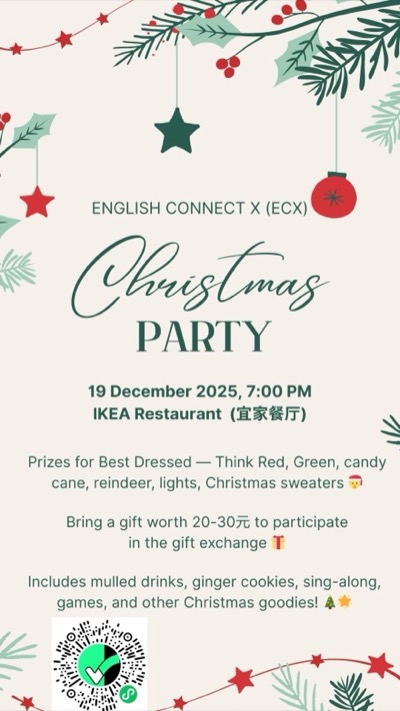
From ONE-child to ZERO-child
In a country once famous for its one-child policy, many young Chinese people are now choosing to have zero children. From 'only children' to 'no children' in just one generation—what changed?
Filial Duty - In this Confucius society, filial piety 孝 require children to respect, obey, and care for their parents, and this extends to continue the lineage. Has something shifted in Chinese family values, when having children is seen as optional?
The nation birth rate - Both Japan and Korea have tried and failed to reverse their birth rates. Is China destined to follow the same path? Do you consider having children as an individual choice, a family’s choice, or a national destiny?
The biological clock countdown - Is the biological clock (of mostly women) the reason for the society’s obsession about age? Is the age pressure actually helpful in making people commit to life decisions?
Gender dynamics - In most Chinese households, who actually does the childcare, cooking, and homework supervision? If marriage means a "second shift" for women, why would they sign up? Do you think the so-called ‘gender war’ play a part?
The "Lying Flat" (躺平) Generation - Some young people say they're too tired to even date, get married, let alone raise children. Is this laziness, wisdom, or a protest against impossible expectations?
The Million-Yuan Baby - It's estimated that raising a child in urban China costs over 1 million yuan. Is this the real reason young people aren't having kids, or just a convenient excuse?
The alternatives - What do you think of the alternatives? DINK life? Pets as children? Adoption? Single mother with sperm donor? Egg freezing?
Don't miss this Friday's discussion. All the stuff DeepSeek would refuse to talk about (out of my scope... let's talk about something else...) 😂 VALHALLA IS FOR THE BRAVE!
Intro
My very first memory in life was… My first best friend in school was… The first time I left home… The first time I traveled outside of my hometown… The first time I got on the plane… The first time I tried coffee… My first time traveling alone… The first time I realised my parents have gotten old... The first time I realised I'm not immortal and my time is limited on earth... (oops too deep?)
You get the idea! Get thinking and get ready to share your ‘FIRSTS’. 😇If you’d like to prepare: think of a simple/small FIRST and a FIRST that was significant in your life (that you can share with the group).
Discussion
If you could experience a "first time" again (like reading a book, watching a movie, tasting a food), which one would you choose and why?
Is first experience always the most memorable?
Do you find "first times" to be more frightening and less exciting as you get older?What "first" in your life taught you the most important lesson?
What's a "first" you're still waiting to experience?
What did you get wrong the first time?Beginnings vs. Endings: Which are more significant? Is the "first step" more important than the "last step" in achieving a goal?
How about LOVE? First Love vs Last Love? ❤️ The topic everyone is itching to talk about, I’m sure 😉
Could the last be more meaningful than the first? In what cases do you think this could be?“There is never a second chance to make a first impression." Do you agree? How important are first impressions in Chinese culture vs. other cultures?
"First impressions are always accurate." Agree or disagree? Discuss.Note to group leaders and everyone — these are just some discussion points to get you started. As always, you go where the group goes. LIKE WATER.
I initially had another topic in mind, but since this week is Thanksgiving for our American friends, let’s talk about GRATITUDE. ❤️
What is gratitude?
It's the ability to look at ordinary moments and see them as gifts - to realize that the things you've stopped noticing are actually small miracles.I feel there’s a difference between gratitude and 感恩 in that gratitude doesn’t tend to be directed to a ‘giver’, while as I understand it, 感恩 is directed to someone who has done something for you. Is this true? Hope our Chinese friends can enlighten us.
Meanwhile, ‘practicing gratitude’ is nowadays such a common and popular practice in the West, similar to Manifestation (if some of you remember this topic from a couple of months back). It involves methods such as gratitude journal, mental practice (similar to meditation, but focusing on gratitude), and so on. Is this another western mumbo jumbo? or is there something in it? 😉
If you’d like to prepare, please think about:
- What's one incredibly small, simple thing you feel grateful for? e.g., the sunshine on your face on a Thursday morning, the smell of coffee
- What’s one “big stuff” you feel grateful for? e.g. health, home, family, job
- Do you think it is sometimes harder to appreciate the "big stuff" vs the "small stuff"? If so, why?
- Who is someone from your past you never properly thanked? What would you say to them if you could?
“Enjoy the little things, for one day you may look back and realize they were the big things."
Post-discussion Note
Gratitude ended up to be a more difficult topic than I thought. I think it could be an easy-medium topic if you don't delve too much into it and stay on the surface level, but there's actually quite big difference between gratitude (a western concept) and "being thankful to someone" (the concept that Chinese generally understand). I found that it was extremely difficult for the Chinese to understand that 'gratitude' isn't directed to anyone in particular, and it can be for a very very small thing, like the sunshine, or the soft warm fur of your cat.
🗣️ ECX This Friday: What Scares You? 你害怕什么?🗣️
Scared of spiders? Giving a speech in public? Or maybe... dying alone? 🥺
This Friday, we're diving into the fascinating topic of FEAR. This is your chance to:- Share silly and simple fears (like a fear of pigeons or bats! if only you'd seen the bats i've seen..)
- Things that we fear collectively as a culture, like zombies, or serial killers. How about the Chinese? Ghosts? Which one is scarier: ghosts or letting down your parents? 😁
- Discuss deeper life worries—things that keep you awake at night in cold sweats..
If you’d like to prepare in advance, please prepare one simple fear, and one deeper, more personal fear that you can share with the group.
But no pressure, you can share as little or as much as you want, though generally it is more rewarding when we get into deeper discussions.This Friday’s topic is MY ENGLISH JOURNEY.
This is a chance for all of us to share our personal stories.
Your mission: please prepare a short 3-5 minutes speech about your English learning journey.
A simple structure:
- Briefly introduce yourself
- Then tell us your story.
For our regular members, you can share with us:
- What made you join ECX? Were you shy/nervous/excited?
- How has ECX impacted you? This isn’t just about English. it could be about the friends you’ve made, gaining better social skills, building confidence, etc.
- A memorable moment or a positive story. 😌
For the new members, you can share with us:
- your past English journey.
- why did you join ECX?
- you goals and hopes.
If you're a foreigner you can share about:
- Your second language learning journey, or Kunming journey.
- Why do you join ECX, what did you get out of it, or what do you wish to get out of it?
A few optional questions to think about (to help you prepare):
(You don't have to answer all of these! They are just here to spark ideas for your speech.)- What was your biggest struggle in learning English, and how are you overcoming it?
- Was there a specific person, book, or movie that inspired your English journey?
- Besides language, what is the most valuable thing you've gained from being part of this community?
- Is there anything that you wish ECX did/had? Feel free to give feedback or suggestions.
Intro
Beyond 'Hello': Navigating First Meetings and Interactions Across Cultures - for the wordy subtitle 😏
Join us tonight as we investigate the shocking questions and taboos that we ask each other, and the why behind them. Why in some cases the people from indirect culture (the Chinese) can be extremely direct? And why in some cases the people from the direct and straightforward culture (the 'West') can be less direct? When and why are the rules broken?
As some of you may know, Tariq and I often choose a discussion topic based on recent events, this time included. We have stories and are dying to discuss this, hah!
Discussion
"Beyond 'Hello': Navigating First Meetings Across Cultures"
List 3 common questions people ask when they meet someone for the first time in China.
What about ONLINE? (when you never met the person before)
Now, try to list 3 'safe' questions you think people ask in English-speaking countries like the USA, UK, or Australia.What questions are common in China but might be considered "taboo" or too personal in Western cultures? (e.g., age, salary, marriage, weight, cost of items).
Conversely, what questions from the West might feel too cold, distant, or even suspicious to a Chinese person? (real name??)Direct vs indirect culture.
Why is it in some cases, Chinese can be very indirect, but in other cases, direct, or even brazen?
Compare the different views:
In Chinese culture, being indirect is often seen as polite, respectful, and saving face.
In many Western cultures, being direct is often seen as honest, efficient, and clear.Why do each value this? When are the rules broken?
Context is King - The "Cultural Rules"
It's not always black and white. When is it okay to be direct in China?
Are Chinese people more direct when they talk with foreigners? Do they feel like they have the rights to be direct and brazen?When are Westerners more indirect? (e.g., giving negative feedback: "That's an interesting idea, perhaps we could explore it further" often means "I don't like it." Or, saying "I'll think about it" to mean "no").
Our Halloween included people coming in costumes, costume competition, decorations, treats, and pub quiz. Below is the pub quiz, which you can modify if you'd like to have a smaller and quieter version of a Halloween Corner.
HALLOWEEN PUB QUIZ
Get into groups.
Think of a creative team name with a Halloween theme.
Remember, no phones.
The team who gets the answer right, will get a candy. Leave them on the table, so we know the scores at the end.Round 1: History & Origins
Let's start with where it all began. These questions are about the ancient history of Halloween.
Over 2000 years ago, which ancient people celebrated a festival called 'Samhain' (pronounced saa-wn) at the end of October?
Answer: The CeltsThe Celts believed that on 31st of October, the boundary between the world of the living and which other world became very thin?
Answer: The world of the dead / the spirit world.Why did people originally wear masks and costumes on this night? HINT: To celebrate the harvest, or to hide from ghosts?
Answer: To hide from ghosts / to disguise themselves from spirits.The Christian church has 'All Saints' Day' on 1st of Nov. What was the evening before called, the night that became "Halloween"?
Hint: “Saint” = Hallow
Answer: All Hallows' Eve.Round 2: Traditions & Symbols
Let's talk about the traditions we see today. Why do we do these strange things?"
The tradition of carving pumpkins came from Ireland, but they originally carved a different vegetable. What was it?
Answer: Turnips.According to the Irish legend, what was the name of man doomed to walk the Earth with only carved turnip lantern?
Answer: Stingy Jack. (Hence, "Jack-o'-Lantern")In the Middle Ages, poor people visited houses and offered to pray for the dead in return for what? (the origin of trick-or-treat)
Answer: Food (specifically, "soul cakes").Why are black cats a Halloween symbol?
Answer: Believed to be witches’ “familiars” (spirit helpers or spies)Round 3: Halloween in modern time
This round is all about how Halloween appears in modern life— and how people celebrate it today!
In “trick-or-treat,” what does the “trick” mean?
Answer: A threat to play a prank if no treat is given"Spooky Season" is a popular modern term for Halloween period. On social media like Instagram, what is a very common photo during this Spooky Season?
(Hint: It's a drink from Starbucks).
Answer: The Pumpkin Spice LatteWhich Disney movie featuring Halloween Town and Christmas Town, and it’s got a character called the “Pumpkin King”?
Answer: The Nightmare Before ChristmasWhich Pixar movie is about the Mexican Day of the Dead (Día de los Muertos)?
Answer: CocoInteractive “Bonus Round” Idea
Make your best spooky laugh for 3 seconds.
Describe a scary movie in one sentence without naming it. Others guess.Intro
COMMUNITY: a group of people who share a place, a purpose, or a feeling of belonging — and who affect each other’s lives.
Where do you feel a sense of community in your life right now? How do you find your community? How important is a community for you?
We'll also discuss contrasts between the different communities: Hometown vs. Where you live now, Online vs physical, Villages vs Big Cities, Small vs Large; potential dilemma (should we limit who's in - or is that discrimination?), and your ideal community!"In a world that is increasingly alienating, a true community is like an oasis in a desert."
I totally just made that up. Agree or disagree? Come up with your own motto? 😉
Discussion
Warm-up
Where do you feel a sense of community in your life right now? Besides your family, what is the most important community you belong to?Birthplace vs. destination
Which community shapes a person more — the one where they were born, or the one where they choose to live later?
Some people say that in the modern world, "community" is something you choose (like friends), not something you are born into (like your hometown). Do you agree?Online vs physical
Which community do you think has a bigger influence on people’s lives today: online community (like an online gaming friends) or their physical community (with face to face meet up)? Why? On a smaller scale, compare the ECX weixin group (a lot more people) and the Friday meet ups (less people).Villages vs Big Cities
How has the idea of "community" changed in China over the last 20-30 years? (Think about: moving from villages to big cities, living in apartment blocks instead of hutongs).Small vs Large
Is it more important to have a few very close friends or a wide circle of friendly acquaintances in your community? Why?Extra Questions
Should a community be allowed to limit who can join (for safety/values), or should any barrier be called discrimination?
If you could create a new community around any hobby or interest, what would it be and what would you do together?
In the West, a lot of communities revolve around religious community, e.g. churches. How about here?
In your opinion, what are the three most important things that make a community feel strong and friendly? (e.g., trust, shared activities, helping each other).
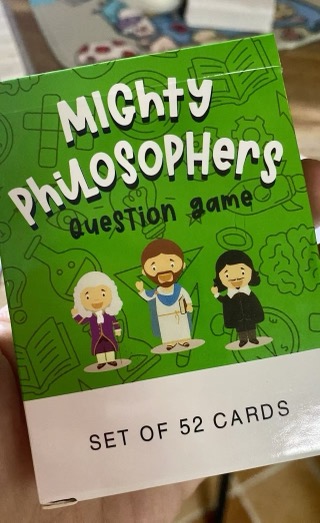
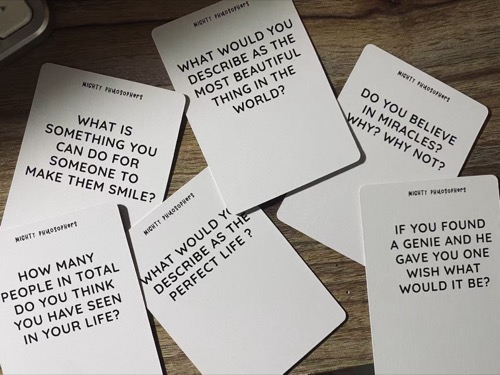
You can buy this set of cards on Taobao. It's got a bunch of interesting questions that can be easy or deep, depending on the person answering. Shuffle the cards, deal each person 3-5 cards. People can pick one card in their hands that they want to answer, then draw a new card from the deck after answering. Alternatively another person can pick someone's card without looking.
This card set went very well for us and seemed good for every level!
MANIFESTATION is the process of bringing something from the non-physical realm (thoughts, ideas, beliefs, desires) into the physical, tangible world. It works on the idea that our internal world shapes our external reality.
MANIFESTATION is an extremely common practice in the West, particularly in the last 20 years. We're gonna look into how celebrities and the popular culture give rise to the popularity of this practice, how people do it, whether you believe in it. It would be great to discuss too whether there are similar ideas in Chinese culture. (I'm sure there are, and would love to hear more about it from you all!)
Warm-up Questions
- Have you ever heard of the word manifestation before? What do you think it means?
- Do you believe it’s possible to manifest your dreams? Why or why not?
- Can you give an example of a time when you wished for something and it happened?
More Cultural Lens
What is Manifestation? Laws of attraction. Turning your dreams of reality. If you think it, it will come. If you can dream it, you can do it.
Started by THE SECRET, the book that sold 30 million copies and is a WORLDWIDE phenomenon.
People like Oprah vouch for it. The central claim of the book: "Thoughts become things." ASK, BELIEVE, RECEIVE.So popular the practice is, the word manifestation is used very deliberally. i.e. Did you manifest that? 100% manifestation. I’m manifesting.
Methods of Manifestation
-
Visualization (想象) - Imagine yourself already having what you desire. This strengthens belief and sends “signals” to the universe.
-
Affirmations (肯定句) - Positive statements you repeat to yourself to influence your mindset and beliefs.
-
Vision boards (愿景板) - A visual collection of images, words, or symbols representing your goals.
-
Scripting (写作意图) - Writing down your life as if your dreams have already come true.
-
Gratitude (感恩) (Note that this later becomes its own separate topic in ECX!)
Give personal examples! TRY IT yourself now. The key is to be specific! (what, where, who is there, how it feels).
Cultural Perspectives
Does manifestation exist in Chinese culture? (Compare to concepts like Feng Shui 风水 or 心想事成.)
How do Western and Chinese views on manifestation differ?Debate Questions
“Manifestation is just wishful thinking.” — What do you think?
Is manifestation just Western mumbo jumbo? LOLPost-discussion Note
Have to admit, manifestation was probably the hardest topic ever. When we were 10 mins in and someone was still looking at the word ‘manufacture’ on their phone.. 😂
Not only the word itself but the idea of manifestation seems very far from Chinese sensibilities, that conceptually it’s very hard to understand. I was admittedly a little surprised by this.
Our theme today is IDENTITY.
What makes you, you?
A couple of quotes to get your thoughts going: 🤓
"Your time is limited, so don't waste it living someone else's life." - Steve Jobs
"Be yourself; everyone else is already taken." - Oscar Wilde
What three words to describe yourself and why?
Values as Foundation: What are the three core values that are most important to you (e.g., honesty, family, freedom, creativity)?
What group or community do you feel you most belong to?
Defining "Chinese-ness": What does it mean to have a Chinese identity in the 21st century?
Do you feel like a slightly different person when you speak English compared to when you speak Chinese? Does speaking English allow you to express different parts of your personality?
The Story of Your Name: What is the story or meaning behind your name? Do you feel your name has shaped your identity in any way?
Hobbies and Passions: Is your identity defined more by your profession (what you do) or by your hobbies and passions (what you love)? Why?
What labels do others often put on you (e.g., "the responsible one," "the funny one," "the quiet one")? Do you accept these labels or resist them?
REINVENTION in the dictionary: the action or process through which something is changed so much that it appears to be entirely new.
We will explore reinvention – the daring art of leaving an old version of yourself behind to become who you are. 😎
One of my favourite quotes of all time as food for thought 😌:
“Man cannot discover new oceans unless he has the courage to lose sight of the shore.” — André GideIcebreaker & Warm-ups (Easy) - Make it quick, not everyone has to answer every question.
- If you could reinvent one small thing about your daily routine to make your life better, what would it be and why?
- Think about a hobby or skill you abandoned. Would you ever try to reinvent your relationship with it? How?
- What's one piece of "old you" (a belief, a style, a habit) that you are happy you left behind?
- Has a song, book, or movie ever inspired you to see yourself differently? Which one and why?
More advanced questions
-
Forced Reinvention: Sometimes reinvention isn't a choice (e.g., after a job loss, a move, a personal loss). How does forced reinvention differ from chosen reinvention in its process and outcome? Does reinvention require courage, or is it sometimes forced upon us?
-
The Price of Change: What do we have to give up or sacrifice when we reinvent ourselves? Is it always worth it?
-
What is harder: reinventing your career, your personality, or your relationships? Why?
-
Can failure be the best opportunity for reinvention?
-
The Ultimate Reinvention: Many stories explore reinvention through the idea of "starting over with a blank slate" in a new city where no one knows you. Is this truly possible, or do we always carry our past with us?
-
Is constant reinvention a necessary skill for happiness in the modern world, or does it lead to a loss of stability and identity?
This is a tough week following the death of our friend. So it is very personal to us.
This week the theme of loss and remembrance keep on coming, and it just happens that we're in the middle of 中元节. Therefore the theme of today is:
BRIDGES BETWEEN WORLDS
in which we'll talk about understanding the Zhongyuan Festival (Ghost Month) and global views on the Afterlife.
As the saying goes: "Understanding the reality of death is the key to understanding how to live." Life and death are truly two sides of a coin.
The Ghost Festival or 中元节
In your family or hometown, what are some specific customs or traditions observed during 中元节?
What do you think is the deeper human need behind rituals like the Zhongyuan Festival? Is it about comforting the dead, or is it more about comforting the living? How does it help people cope with loss?
Imagine you could send a message to someone in the afterlife during Ghost Month. Who would it be and what would you want to tell them? Or, what one question would you ask them?
Afterlife
-
How do you choose to be remembered?
-
You receive the news that you have 1 year of life left. How do you choose to spend that time? How about 1 month? 1 week? 1 day?
-
You are in the world of the afterlife. You are granted 3 days to say you're goodbyes as a ghost. Where or would you visit and why?
-
Where do you believe you go after passing from this world?
-
Tonight our theme revolves around a very interesting word: PRIDE (骄傲).
This is a word that can be tricky between Chinese and English because its meaning changes a lot across cultures.
· In Chinese, 骄傲 often has a negative meaning. It can mean someone is arrogant, conceited, or too proud of themselves.
· In English, "pride" is most often a very positive word. It means a deep feeling of satisfaction and pleasure in your own achievements, the achievements of someone close to you, or your group's qualities.We want to be more upbeat this time so let’s explore this positive side of pride in English. We'll discuss: national pride, cultural pride, and maybe even personal pride. 😎 All positive, rather than negative/criticism.
(For foreigners, Chinese or China can be swapped to the person's nationality or country.)
- Do you feel lucky to be born Chinese?
- What are you most proud of for being Chinese?
- What are most proud of about your country?
- What aspects of culture or family tradition are you proud to uphold?
- If you could choose where to be born, would you still choose China?
- What things about yourself are you proud to have preserved, despite the pressure?
- Is being proud a good thing or not? Why or why not?
Today’s topic is RAT RACE.
Love it or hate it, we have all been in it, or are in it still even now. In the west, many people spend a lifetime trying to escape it. How is it here in China? Are we all “working jobs we hate to buy shit we don’t need" (Fight Club) ?The rat race isn’t just about hard work—it’s about running toward the wrong finish line. The real question: Are you winning… or just running? 🐀🎯
-
What are you prepared to do to escape the rat race? Do you want to escape?
-
A safe life of toil or a uncertain but comfortable life: how do you choose and why?
-
To move forward, what are you prepared to leave behind?
-
A job, a wife/husband, kids, a car, house, wealth, or maybe something else. For what reason do you run the rat race?
-
Do you think you will be satified with the reward at the end of the rat race? Is it worth it?
-
What is your iron shackle to the status quo of everyday life? Family, opportunity, expectation, duty, means, something else? Are you prepared to cut it or is security?
-
Have you ever thrown away an amazing opportunity for expectation to stay in the rat race? Would you or would you not? Why?
-
In the West, Phoenix is a legendary bird found in myths best known for its dramatic life cycle of death and rebirth through fire. Though we find that Eastern Phoenix is a quite different. Let’s discuss!
In your life, have you ever experienced a “rise from the ashes” moment? What happened?
Why do you think the phoenix appears in both Chinese and Western myths? What might that say about human hopes and fears?
If you could “burn away” one habit or mindset and start fresh, what would it be?
Do you think people truly change after a major setback, or do they simply return to who they were before?
In your opinion, which is harder — falling down or finding the courage to rise again?
What role does time play in the process of recovery and reinvention? Can a phoenix rise too quickly?
If you were designing a modern phoenix for today’s world, what qualities would it have besides immortality?
Is it possible to have a “phoenix moment” without experiencing destruction or loss first?
In Chinese culture, the phoenix (凤凰) is often linked to virtue, grace, and harmony, while in the West it’s linked to survival and renewal. Which meaning speaks to you more, and why?
An illusion is something that tricks your senses or mind—it makes you see, hear, or believe something that isn’t real or true.
“We are such stuff as dreams are made on, and our little life is rounded with a sleep.” — Shakespeare, The Tempest
“The world is an illusion, but you must act as if it is real.” — The Bhagavad Gita (Ancient Hindu scripture)
Easy
Do people show their 'real life' on social media or is it just an illusion of who they are?
Is 'love at first sight' real or just an illusion?
What’s one common illusion foreigners have about China? OR What’s one common illusion Chinese people have about <“the West”/ insert country>?Medium
Memories change over time. Does this mean our past is an illusion?
If a tree falls in a forest with no one around, does it make a sound? How does this relate to illusion?
Is it better to chase your dreams, even if they might be an illusion?
Have you ever believed something to be true, only to find out later it was an illusion?
If everyone agrees on a something that they know to be a lie, is that the truth?
Is illusion always harmful or beneficial? If not always, when? Describe.Hard
If you could live in a perfect VR world (like The Matrix), would you? What defines 'real life'?
Can we ever truly know what is real, or is all of life an illusion in some way?
If an AI chatbot acts human, is it ‘intelligent’ or just a clever illusion? Can machines ever be truly conscious?
AI continuously create a better illusion of reality, and makes it harder for people to tell between real and fake. How do you think people will deal with this fiercer battle between illusion and reality?Which is crueler? Allowing someone a false illusion that hurts them or demonstrating the true reality in the hope that it will help?
At what point does illusion have the force of reality?
Theme of the day: MASKS [something people use to hide their true feelings, thoughts, or identity from others]
Leaving you a couple of quotes as food for thoughts: 😉
"Be yourself; everyone else is already taken." — Oscar Wilde
"All the world’s a stage, and all the men and women merely players." — Shakespeare
WARM-UP ACTIVITY
Quick Poll: For every question you can ask by show of hands whether people Agree or Disagree (to warm people up for deeper discussions :)- “It’s okay to hide your true feelings.”
- “Everyone wears a mask in society.”
- “Some people truly knows my true self.”
- “Wearing a “mask” helps people succeed (at work or school).”
- “People in my country wear more masks than people in other cultures.”
- “It’s better to blend in than to stand out.”
- “Being fake is sometimes better than being real.”
- “I feel I can be myself here at ECX.” :)
QUESTIONS FOR CONVERSATION STARTER
(Feel free to do them however you want! You can focus on just a couple of questions, or you can go around and ask people a different question each. You can also modify the questions as you see fit, this is just a guide.)- In Chinese culture, ‘saving face’ is important. Do you think this is a positive or negative kind of ‘mask’?
- If you could wear a mask to become someone else for a day, who would you choose and why? Or what kind of personality would you choose and why?
- Do you think people act differently at work/school, with friends, with family, and when they’re alone? Which version is the “real” you?
- What kind of mask do you wear when you want to impress someone?
- Can pretending to be someone you're not ever be a good thing?
- Have you ever pretended to agree with something just to avoid conflict? How did it make you feel?
- Which do you think is more important: being polite (even if it's a mask) or being honest (even if it’s uncomfortable)?
- Why do people often hide their true feelings, and is that always a bad thing?
- Do you think social media (微信朋友圈) is a modern form of wearing a mask? Do you think people present themselves differently online vs. in real life?
- How did wearing physical masks during the COVID-19 pandemic change the way we interact with others?
Transitory refers to something that is temporary, fleeting, or short-lived. It describes a state, experience, or object that exists only for a brief period before changing or disappearing. 🥹
A topic that's very close to my heart. ❤️
- What is one thing in your life that you thought would last forever, but turned out to be transitory?
- Do you think the fast pace of modern life (e.g., technology, travel, social media) makes everything feel more transitory?
- In your opinion, does the fact that everything is transitory make life more precious or more stressful?
- In some ways Western View often values permanence (e.g., legacy), while Eastern views like Buddhism and Daoism emphasize impermanence (“nothing lasts forever”). What do you think about the differences?
- Do you think life as a whole is “transitory”?
- Do you think a “transitory” lifestyle is something people should aspire to, or is stability more important?
- What is something transient in your life right now (e.g., a job, hobby, or relationship)?
- In Chinese culture, concepts like ‘缘分 (yuánfèn, fateful connection)’ suggest some relationships are fleeting. Do you agree? How do you view temporary bonds?
- Many foreigners come to China for a short time. What advice would you give someone to make the most of a temporary stay here or anywhere?
- Childhood, student life, or living abroad—which transient life stage do you miss the most? Why?
Each person can pick a number and answer the question corresponding to that number.
- Why do we admire rebels but expect conformity in daily life?
- Is China’s ‘996’ work culture a trap or an opportunity for ambition?
- Describe a time you felt trapped by freedom.
- How can social media make us feel more connected but also more isolated?
- Is ‘freedom’ possible without rules? Can rules exist without limiting freedom?
- Why do we say ‘less is more’—but then crave more of everything?
- If ‘ignorance is bliss,’ does seeking knowledge make us unhappy?
- When is something a trap and when is it an opportunity?
- How do Chinese societies value both tradition and progress, when they clash?
- Can war ever be justified to create peace?
- How can someone be both fiercely independent and deeply lonely at the same time?
- Is it wrong to lie to protect someone’s feelings? When does kindness become dishonesty?
- Why do we condemn violence but enjoy violent movies/games?
- How can silence feel louder than words?
- Why do we often want what we can’t have, but lose interest once it’s within reach?
- Can you ever be truly ‘open-minded’ if you dismiss closed-minded people?
- Is it possible to truly ‘be yourself’ while also trying to fit into society?
- Why do we chase happiness, but often avoid the things that actually make us happy?
- How can love feel like both a prison and a liberation?
- Is ‘success’ empty if you had to sacrifice your values to achieve it?
Post-Discussion Notes
At the end the discussion revolved around a few emerging themes:
Freedom vs rules
Trap vs opportunity
Independence vs loneliness
Ignorance vs knowledgeInstead of going through every question with everyone, one way to do this is that each person can pick a number,
and answer the question corresponding to that number.- How do you know when a life gate is worth entering?
- With two gates to two different paths , which did you choose and why?
- Which gates lead to real growth vs. fake success?
- How do you prepare for a gate with no return?
- What scares you most about stepping through your current life gate?
- How do you know when to stop waiting at a gate that won’t budge?
- How do you build the courage to open a gate everyone tells you to avoid?
- What’s the gate to understanding life?
- Which gates hurt more—the ones you rushed through or the ones you missed?
- What gate would your future self beg you to walk through today?
How big is your English vocabulary?
https://preply.com/en/learn/english/test-your-vocabYou can do the test above at preply to check your vocabulary size. Apparently most adult fluent English speakers have around 20,000-35,000 words in their vocabulary! I heard that in Chinese language you need a lot less vocabulary to be "fluent", as well as Korean and Japanese. So when Chinese people complain about how there are too many words in English — perhaps that's true!
MBTI (stands for Myers-Briggs Type Indicator) seems so popular here in China, I’ve never been asked my MBTI this often anywhere else in the world! Is there something about Chinese people and MBTI that really clicks? I’ve even been invited into a Weixin group for just people of my MBTI.
If you don’t know your MBTI I’d highly recommend taking a free test at https://www.16personalities.com
That’s in English. If you know a good Chinese site feel free to share here too.A brief info: 😌 The MBTI assessment identifies people as one of 16 MBTI personality types. Each type reflects how a person naturally prefers to direct and receive energy, take in information, make decisions, and approach the outside world. Knowing this provides a powerful framework for understanding and relating to people.
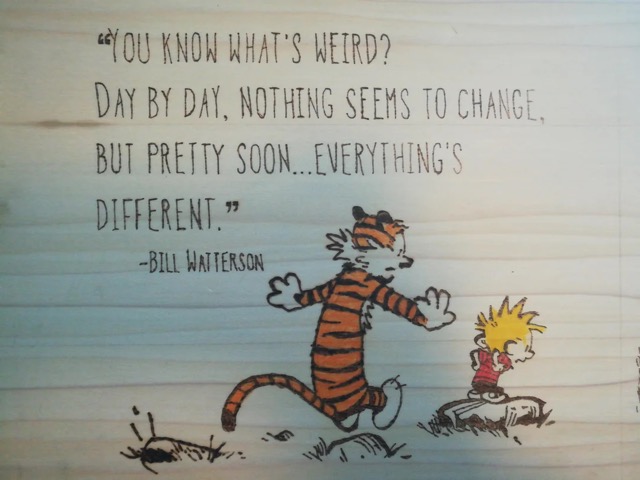
Honestly, you can probably have many many English Corner topics based on quotes from Calvin and Hobbes. Also Peanuts (Snoopy). But Calvin and Hobbes resonates with me a lot more.
This week’s Friday quote is from my favourite comics Calvin and Hobbes:
“You know what’s weird? Day by day nothing seems to change, but pretty soon, everything’s different.”
This week I happen to have multiple conversations with people about the many versions of “you”and the parallel universe where all these versions of “you” may be.
There are certain crossroads in life in particular that may make you think, what if I had taken that other way? What version of myself would I be? What version of life would I have? Can you think of such crossroads?
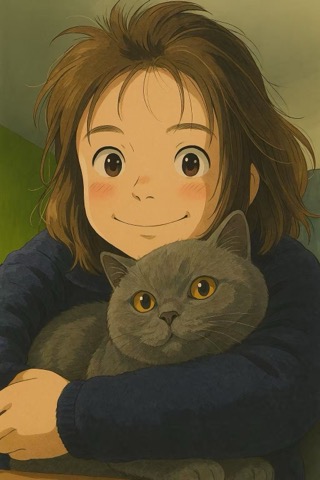
Coincidentally a friend generated this for me yesterday. My Ghibli doppelgänger! Or My life as a Ghibli character.
(doppelgänger, sometimes spelled doppelgaenger or doppelganger, taken from a German word, can mean a ghostly double of a living person.)
At the early meetings of ECX, I tend to start a discussion from a quote, either from a movie or a famous person, as a conversation starter.
Quote of the week is from one of my favourite books of all time: Alice’s Adventures in Wonderland.
"But I don't want to go among mad people," Alice remarked.
"Oh, you can't help that," said the Cat: "we're all mad here. I'm mad. You're mad."
"How do you know I'm mad?" said Alice.
"You must be," said the Cat,
"or you wouldn't have come here."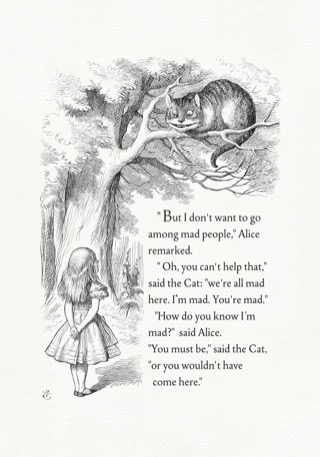
At the early meetings of ECX, I tend to start a discussion from a quote, either from a movie or a famous person, as a conversation starter.
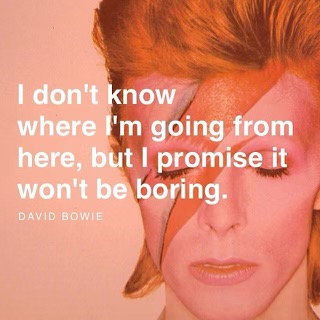
My quote of the week is by David Bowie, English singer, musician, and actor.
“I don’t know where I’m going from here, but I promise it won’t be boring.” - David Bowie
Which would you rather have? A life that’s interesting, or a life that’s happy?